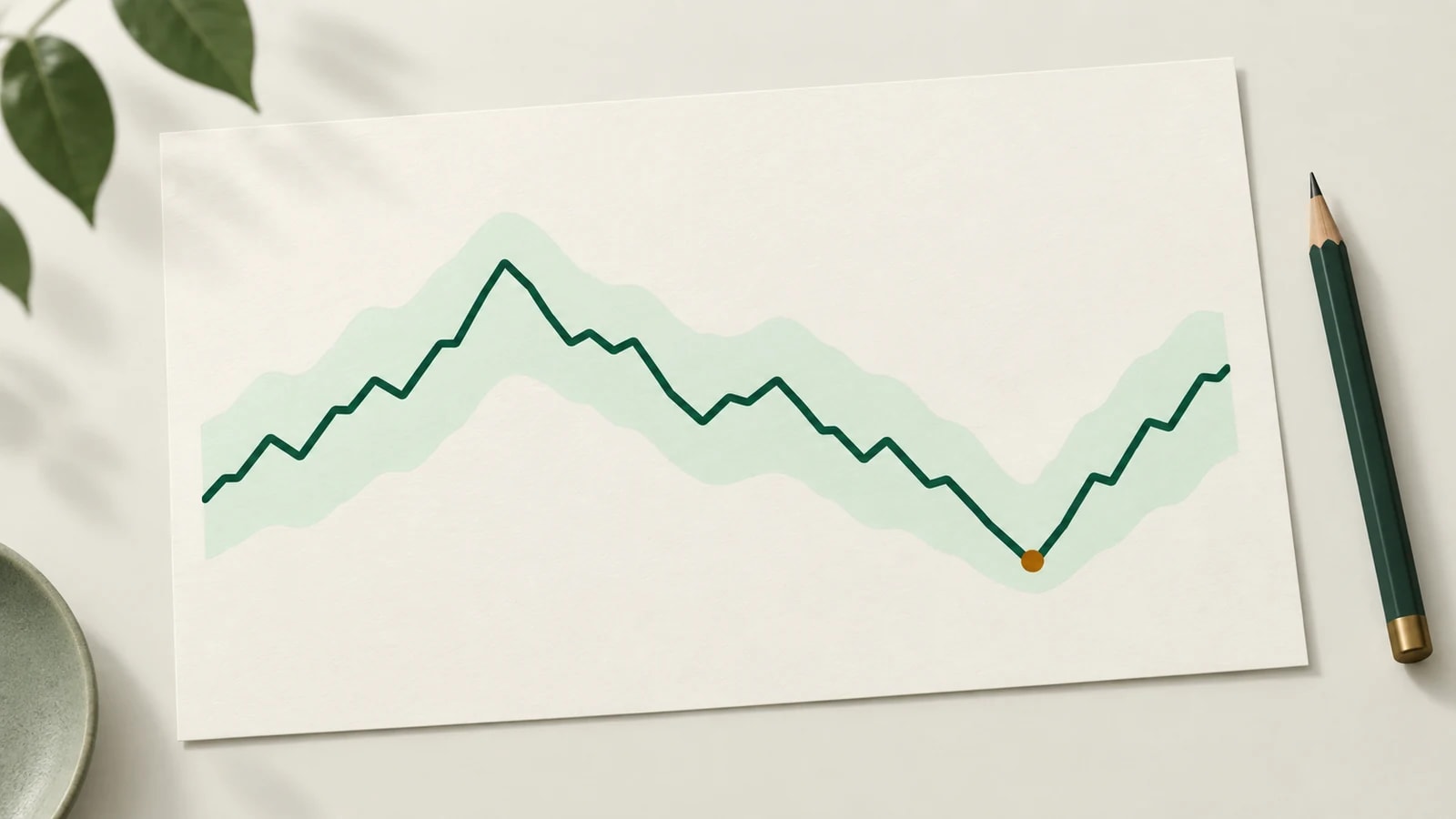

Every product on Amazon and Flipkart shows two prices: the one you pay, and a bigger one crossed out next to it. The crossed-out number is the MRP, and the gap between the two becomes the discount badge. "46% off" feels like a reason to buy today. Most of the time, it isn't.
We track the prices of more than 31,000 products on Amazon and Flipkart. For this post we picked 1,500 of them at random, each with close to a year of price history, and compared their MRP with what they actually sold for. The pattern is hard to miss.
Most products never sell at their MRP
In a full year of tracking, two out of three products never sold within 10% of their MRP. Not once, not even for a day. For the typical product, the highest price it reached all year was still about 29% below the MRP printed on the listing.
Never came close to their MRP
Share of 1,500 tracked products whose price never got within 10% of the MRP in a year.
The MRP is the most a seller is allowed to charge in India. It is a ceiling, not a price anyone was paying last week. So when a listing says 40% off, the product may simply be selling at its normal price.
The badge and the real saving are different numbers
On the day we took our sample, the typical discount badge said 46% off. Then we compared each product's price that day with its own average price over the year. The typical difference was almost zero. About half the products were a little cheaper than usual, and about half were a little dearer.
A big badge tells you how far the price is from the MRP. It says nothing about whether today is a good day to buy.
What to compare against instead
A better reference is the product's own history. Three numbers do most of the work:
- The usual price. What the product normally sells for over the last few months. If today's price is at or above it, the "deal" is just a normal day.
- The recent low. The lowest price in the last 90 days. Being close to it is what a real deal looks like.
- How often it gets there. Some products touch their low every few weeks. Others only during big sales.
That last point matters more than it seems. The typical product in our sample changed price three or four times a month, and its lowest price of the year lasted only two or three days before it moved up again.
A ten second check for any product
- Ignore the percentage on the badge.
- Open the price history for the last three months.
- See where today's price sits: near the bottom, in the middle, or near the top.
So are online discounts fake?
Not exactly. Real price drops happen all the time, and the festive sales bring genuinely low prices on a lot of products. The trouble is only the reference point. A discount measured against a price nobody pays says very little. A price measured against its own history says a lot.
That is how SpendMitra works. Every product page shows the price history, the usual price and the lowest price we have seen, with a plain verdict on top: buy now, good price, fair price or wait. You can look up any product on our Amazon price history or Flipkart price history pages, and if the price isn't right yet, set a price drop alert and let us do the watching.
How we measured this
We picked 1,500 products at random from the 31,637 we track, each with at least six months of price history. Most had a full year, from late September 2025 to September 2026. The usual price is an average weighted by how long each price lasted. MRP figures come from the store listings. All numbers are rounded.